Why your bathroom storage keeps rusting, and what actually survives
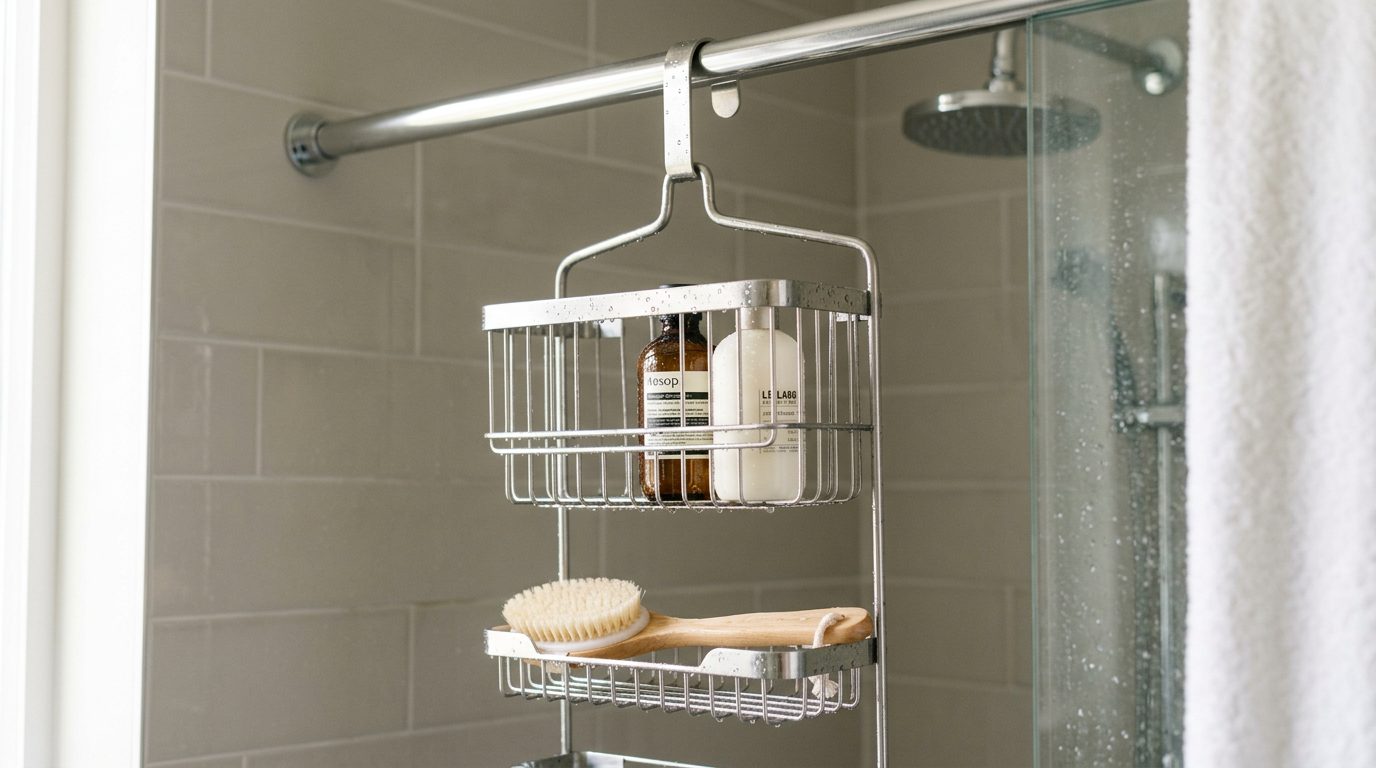
Bathrooms destroy storage faster than any other room in the house, and it's rarely the design that fails first. It's the material — chosen for a photo, not for a daily 40-minute humidity spike every time someone showers.
The material test that actually matters
Chrome-plated steel and genuine stainless steel are almost indistinguishable in a listing photo. Six months into daily steam exposure, they're nothing alike. Chrome plating is a thin coating over steel — the moment that coating gets even a microscopic scratch, water reaches the steel underneath and rust starts from the inside out, often showing up as spotting before you'd expect it. Genuine stainless or a properly coated aluminium doesn't have that failure point, because there's no thin layer to breach.
The honest way to tell them apart before buying: check the listing explicitly says "stainless steel" or "coated aluminium," not just "chrome" or "steel." If the material isn't named clearly, assume it's the cheaper option, because sellers that used real stainless usually say so — it's a selling point they don't leave out. Chrome-plated storage is item five on our list of products not worth buying.
Damp air affects more than metal
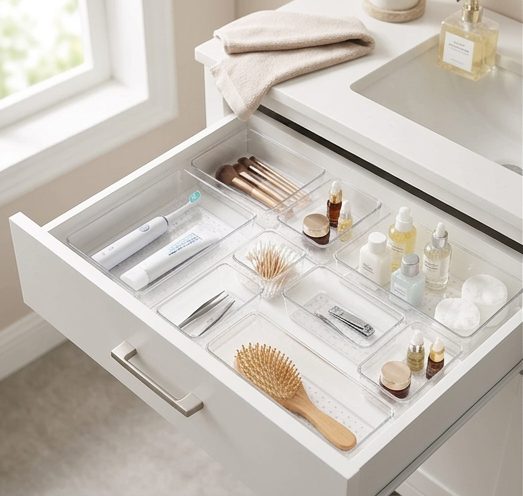
It's not just what rusts — humidity also affects what's practical to store where. Anything paper-based (packaging, cardboard boxes) softens and eventually falls apart in a bathroom cabinet, which is one more reason decanting into proper containers pays off faster here than in a kitchen pantry (in a pantry the trade-off usually goes the other way; see why decanting everything isn't worth it). Clear, wipeable plastic trays hold up to both the damp and the inevitable toothpaste smear in a way cardboard or fabric organisers simply don't.
The most wasted space in most bathrooms
Under the sink is usually the largest storage volume in the room, and it's usually the worst-organised, because the pipework makes it an awkward shape rather than a clean rectangle. An adjustable-leg shelf that steps around the plumbing turns one cramped cupboard into two usable levels — but check the maximum height against your own cabinet before buying, since the space above the trap varies a lot between bathrooms. Measure first, including how far the door needs to swing.
The rule
In every other room, storage decisions are mostly about space. In a bathroom, they're about material first and space second — because the wrong material doesn't just look worse over time, it actively fails, and no amount of good organisation saves a rusted-through caddy.
Picks mentioned in this guide

Hanging shower caddy
Chrome-plated steel looks identical in photos and rusts within a year in a damp bathroom.
- Hangs without drilling
- Suction cups for extra stability
- Drains rather than pooling water
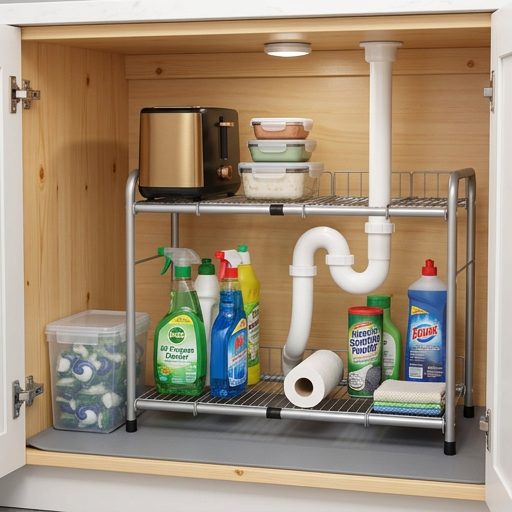
Expandable under-sink organiser shelf
Legs adjust around the pipework, which is the whole problem with under-sink storage. Check the maximum height against your own cabinet.
- Adjustable legs clear the plumbing
- Two levels out of one dead space
- Rust-resistant coating
Clear drawer organiser trays, 8-piece set
Mixed sizes in one set, so you can tile a drawer rather than leaving awkward gaps. Wipe-clean and they don't crack when dropped.
- Mixed sizes tile a drawer properly
- Clear, so you find things by sight
- Works in kitchen drawers too
Keep reading
Seven organising products that aren't worth your money
A recommendation site that only ever recommends things isn't much use. Here's what we'd tell you to skip, and what to do instead.
Getting the house ready for guests: five small fixes that make it feel prepared
Guests notice one thing more than a spotless house: whether there's somewhere to put their things. Five small fixes, in the order a guest meets them.
The New Year declutter, room by room
Every January brings the same resolution and the same stall-out by week two. Here's a version that actually finishes, because it's broken into rooms instead of one overwhelming house.