The New Year declutter, room by room
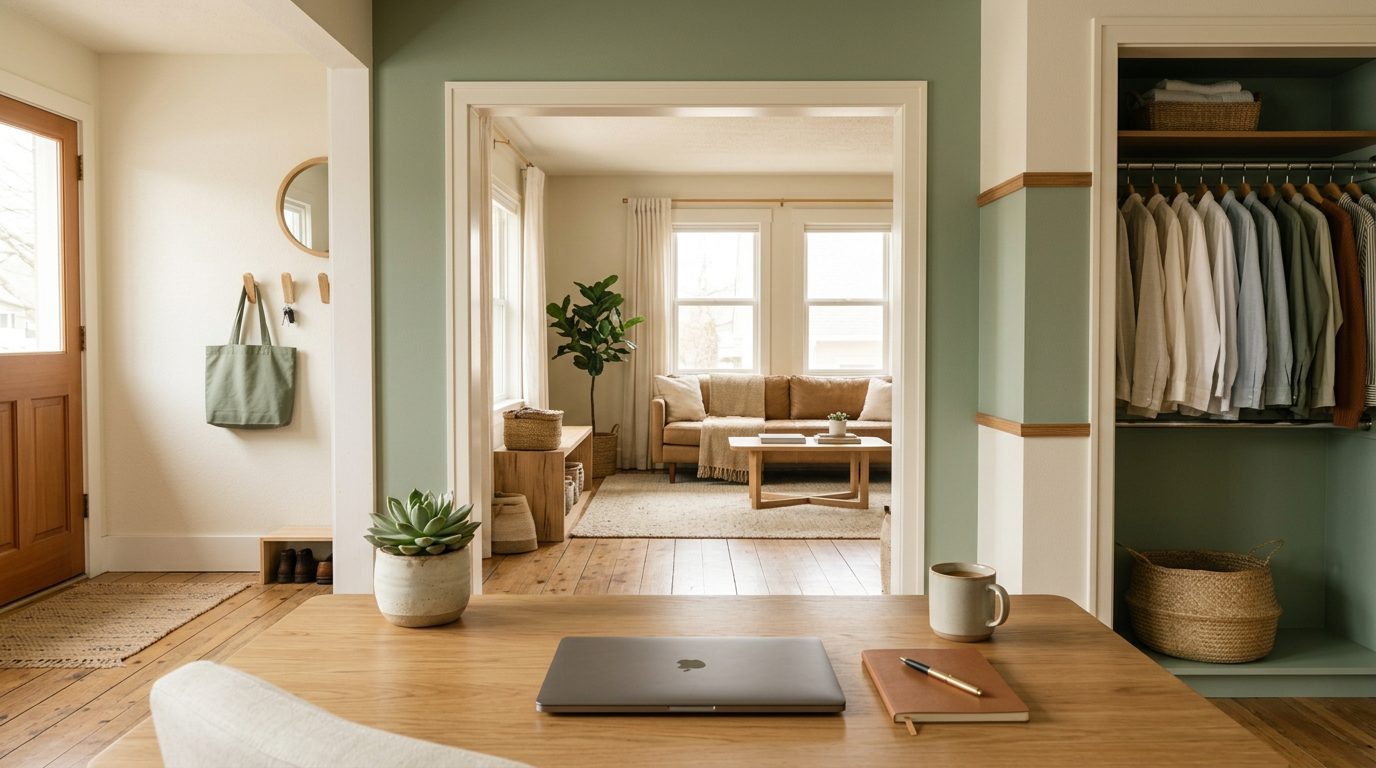
January's decluttering surge fails for a predictable reason: "declutter the house" isn't a task, it's a category of tasks with no clear finish line, so it's easy to start strong on a Saturday and lose momentum by the following weekend with nothing actually finished. The fix is treating it as six small, separately winnable jobs instead of one large, vague one.
Start with the physical sort, before you touch a single room
Before any room-specific work, set up a simple three-way sort: keep, donate, bin. Having physical bins for this matters more than it sounds — without them, "maybe donate this" items end up back in the same drawer by default, because putting something down is easier than deciding about it. A bin specifically for donations gives the maybe-pile somewhere to go that isn't back where it started.
Kitchen and pantry
Start here, because it's the room where clutter is most visible and most frequently handled, so progress here feels immediate. The two-minute habit of measuring before you buy applies just as much to what you're removing as what you're adding — if something's never fit the space properly, that's reason enough to let it go rather than re-organise around it again. If you're restocking rather than just clearing out, our list of what's not worth buying is worth a read before you replace anything.
Closet and wardrobe
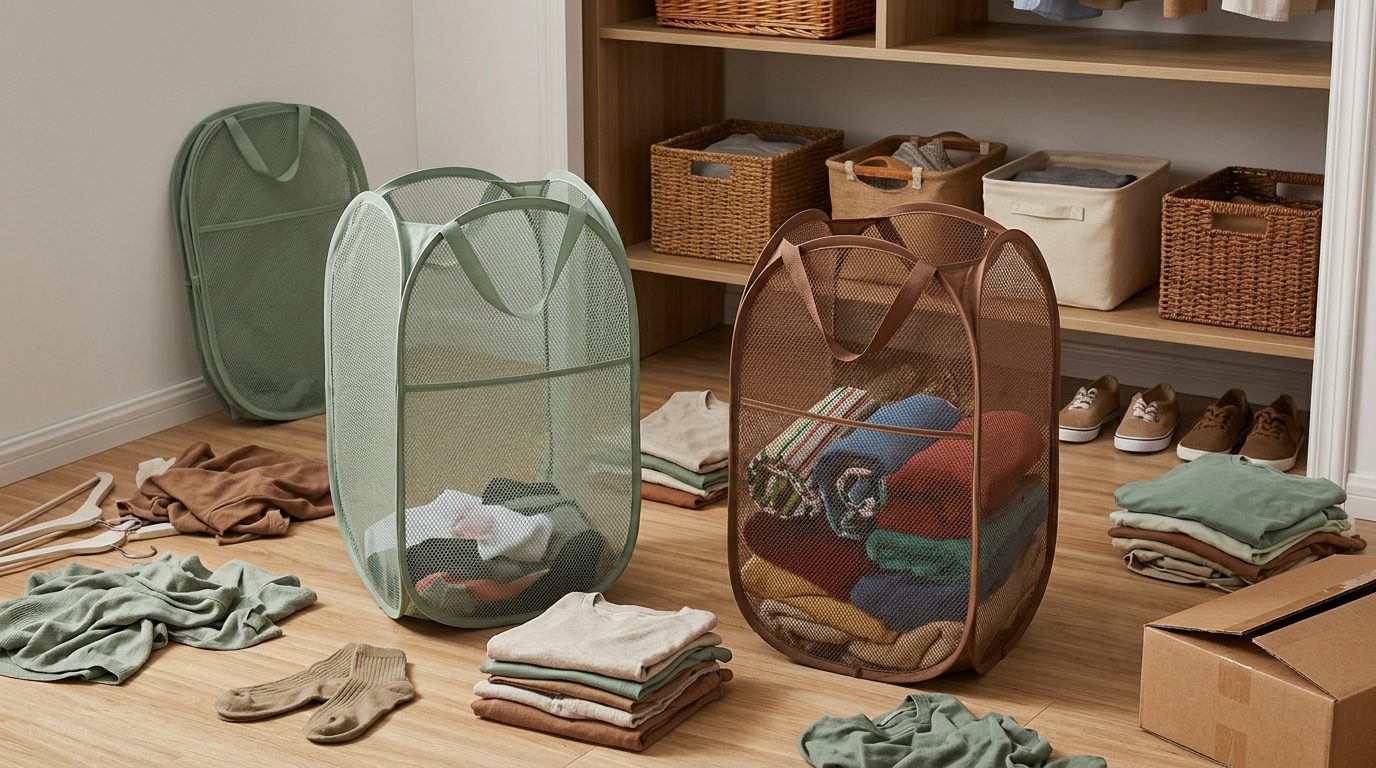
The closet is usually where January's energy is highest and most productive, because the payoff is immediate and visible. The rail-to-shelf measurement is worth doing now if you never have — January is also the natural moment to finish last autumn's seasonal clothing swap if it didn't fully happen. For that, we always reocommend see-through bags, that makes it easy to keep overview of the stored items.
Entryway and mudroom
Smallest room, fastest win. If hooks, trays and a shoe rack aren't already sorted, this is a half-hour job, not a weekend one — which makes it a good second or third room to tackle once you need an easy win to keep momentum going.
Bathroom
Expired products and chrome storage that's started rusting both belong in the bin pile, not the keep pile. What actually survives a bathroom covers the material lessons if you're replacing anything rather than just clearing it out.
Home office
Desks accumulate differently than other rooms — less about volume, more about an increasing mess of cables and undecided papers. The ten-minute cable fix is worth doing even if you don't touch anything else in the room.
Garage and utility
Leave this one for last. It's usually the largest job, the least visually rewarding, and the one most likely to stall the whole project if tackled first. By the time you reach it, you'll also have emptied donation and bin bags at least once already, which makes starting easier than it would have been on day one.
The rule
Pick one room, finish it completely, then stop for the day. A fully finished entryway beats a half-sorted house every time, both for momentum and for the simple reason that an unfinished room looks the same as a room you never started — all the effort, none of the visible result.
Picks mentioned in this guide
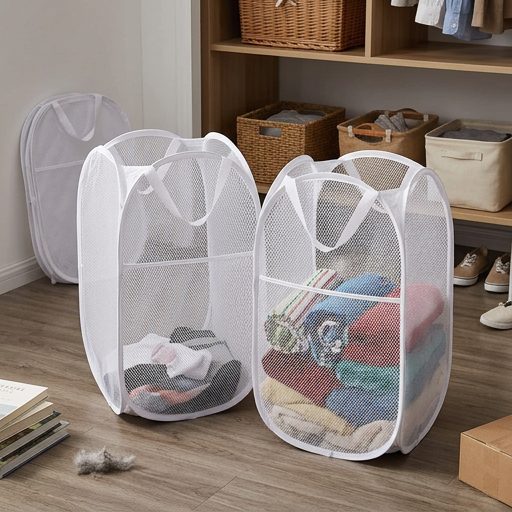
Collapsible laundry baskets, pack of 2
Decluttering stalls when "keep, donate, bin" only exists as a mental category rather than a physical place to put things. Labelled, collapsible bins make the sort visible and give every item somewhere to land immediately instead of a single growing pile you have to re-sort later.
- Turns an abstract decision into a physical, visible sort
- Collapses flat for storage the rest of the year
- Sturdy enough to carry straight out to the car for the donation run
Keep reading
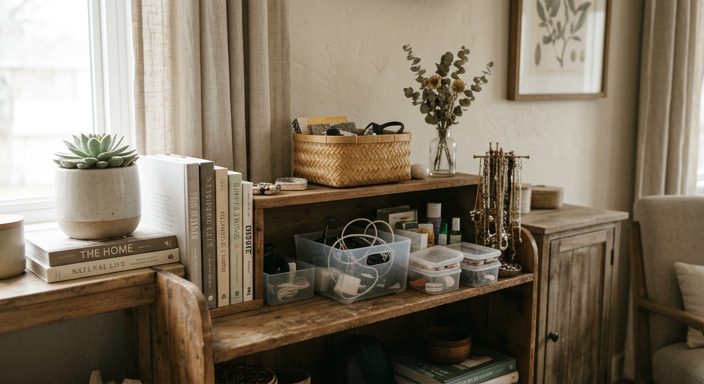
Seven organising products that aren't worth your money
A recommendation site that only ever recommends things isn't much use. Here's what we'd tell you to skip, and what to do instead.
Practical gifts for people who say they want nothing
The "don't get me anything" person is the hardest to buy for. Useful gifts that fix one daily annoyance, sorted by who you're buying for, with what to check on each listing before you order.
The five measurements to take before you buy any storage
Most returned organisers aren't bad products. They're the right product in the wrong dimensions. Here's the two-minute check that prevents it.