The one measurement that fixes most small closets
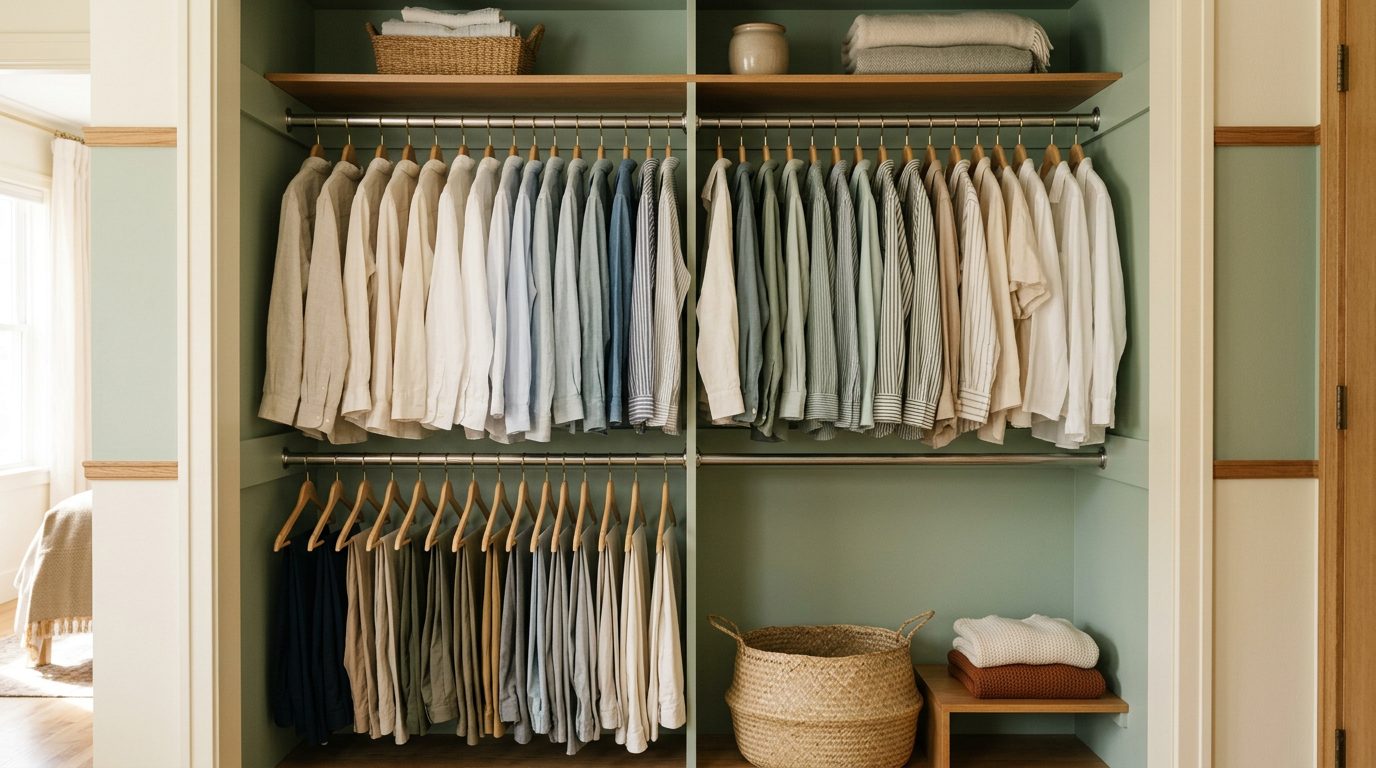
Most small-closet advice starts with a shopping list. Start with a tape measure instead — specifically, the gap between your hanging rail and the shelf above it.
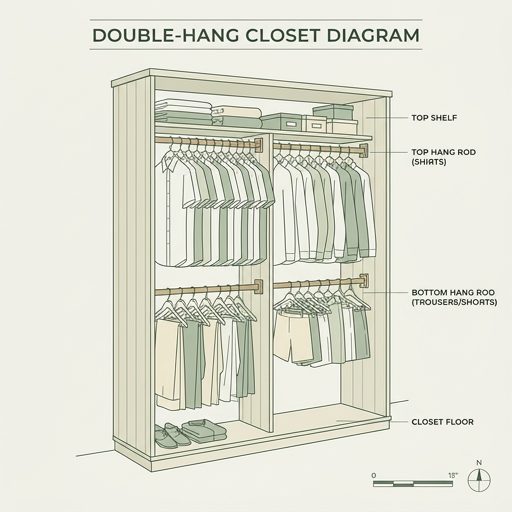
That single number decides more than any product on this page. Under about 25cm, you're stuck with one hanging zone and need to solve the rest through width. Over 40cm, you almost certainly have room for a second rail underneath, which roughly doubles your hanging capacity for the cost of one bracket. Most people never check, buy bins and dividers to compress what they have, and leave that entire second zone as dead air.
Measure it before you read any further
Stand in front of the closet, rail hung with clothes as normal, and measure from the top of a hanger to the underside of the shelf above. Shirts and folded trousers need about 100cm of drop. Dresses and long coats need the full height and can't be split. If everything currently on that rail is shirt-length or shorter, you likely have room to add a second rail below the first without touching a single garment you own.
Once the vertical question is answered, width is next
A single fixed shelf above the rail is almost always under-used, because folded stacks over about 30cm tall become unstable and start leaning. Shelf dividers turn one wide shelf into several narrow columns, so each stack stays upright on its own and a collapsed jumper pile doesn't take the stack next to it down with it.
The hanger swap that costs almost nothing
If you do nothing else in a small closet, this is the highest return per euro available: swap bulky plastic or wooden hangers for slim velvet ones. Bulky hangers cost you rail width per garment — swap fifty of them and you typically reclaim 25 to 30% of your rail length immediately, with zero change to the closet itself. It's the rare organising fix that's pure upside with no measuring required first. Hangers are also one of the few things worth buying in bulk, the exception on our list of products not worth buying.
What to do with off-season clothing
Off-season clothing is the one category that should leave the closet entirely rather than compete for space in it. Under-bed storage is the natural overflow, provided it has a clear window — a sealed bag you can't see into gets forgotten by the next season change, and forgotten storage is how closets slowly refill with things nobody's worn in two years. It's also the natural moment for the autumn switch-over, when the other seasonal jobs are due anyway.
The rule
Closets fail vertically before they fail horizontally. Check the rail-to-shelf gap first, because it's the one measurement that tells you whether you're solving a genuine space shortage or just a lack of dividers. The same measure-first habit applies to every other room; the five measurements covers drawers and shelves.
Picks mentioned in this guide
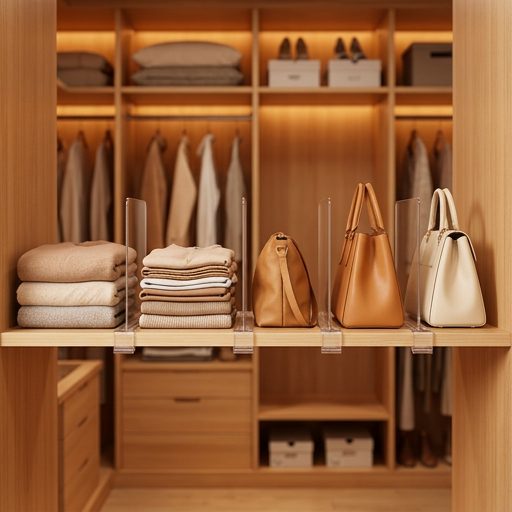
Acrylic closet shelf dividers, set of 8
Clamps onto an existing shelf and stops jumper piles collapsing sideways. Measure your shelf thickness first — most fit up to 2 cm.
- No tools, no drilling
- Works on wire or solid shelves
- Clear, so it disappears visually

Slim velvet non-slip hangers, 50-pack
Swapping bulky plastic for slim velvet typically reclaims 25-30% of rail length. The cheapest real gain available in a wardrobe.
- Reclaims rail space immediately
- Clothes stop sliding onto the floor
- Uniform look costs nothing extra
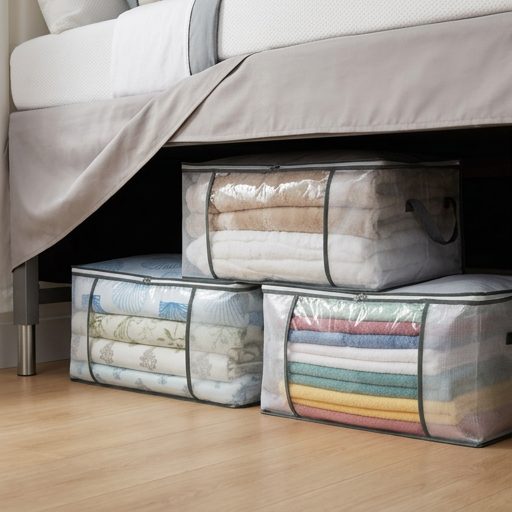
Under-bed storage bags with clear window, set of 3
Fabric with a reinforced base beats vacuum bags for anything you'll need again within six months — no re-sealing, no compression creases.
- Clear window means you can skip labelling
- Handles on the short side for low clearance
- Holds shape when half empty
Keep reading
Getting the house ready for guests: five small fixes that make it feel prepared
Guests notice one thing more than a spotless house: whether there's somewhere to put their things. Five small fixes, in the order a guest meets them.

Seven organising products that aren't worth your money
A recommendation site that only ever recommends things isn't much use. Here's what we'd tell you to skip, and what to do instead.
The New Year declutter, room by room
Every January brings the same resolution and the same stall-out by week two. Here's a version that actually finishes, because it's broken into rooms instead of one overwhelming house.