The right and wrong way to store outdoor furniture for winter
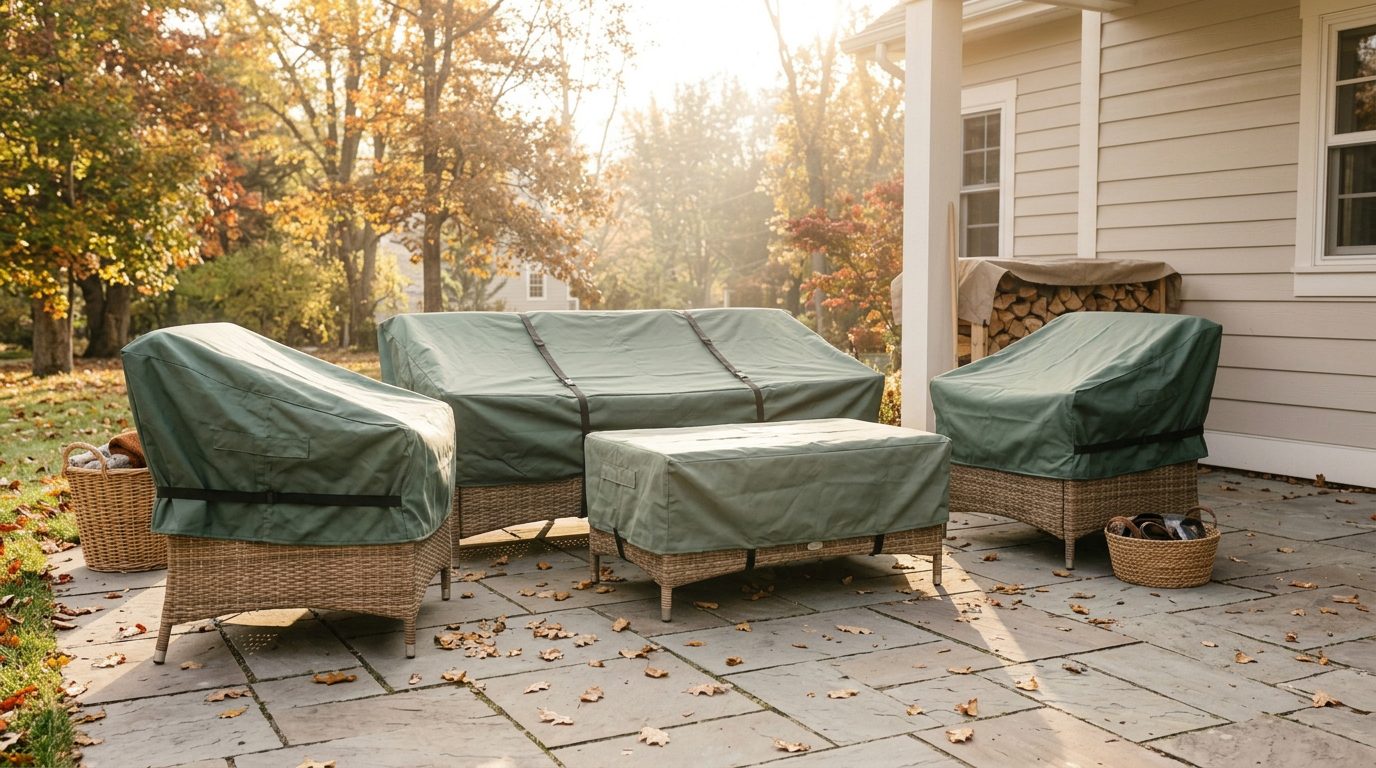
Most outdoor furniture doesn't fail from one hard winter. It fails from being covered badly for several winters in a row, each one trapping a little more moisture than the last until the frame or fabric gives out. The fix isn't more effort, it's doing the two or three things that actually matter instead of the one thing that feels like it should.
The cover itself is the first decision, and it's easy to get backwards
A fully sealed tarp feels like the safest option, and it's often the worst one. Condensation forms under any cover overnight as temperatures drop, and a sealed tarp has nowhere for that moisture to go — it sits against the furniture until the next time you check, which for most people is spring. Furniture under a cheap sealed tarp can come out damper than furniture left completely uncovered all winter.
What actually works is a breathable cover with taped seams: rain stays out, trapped moisture still finds a way out. Check the material is explicitly described as breathable or vented, not just "waterproof" — waterproof and breathable are different properties, and a cover can have one without the other.
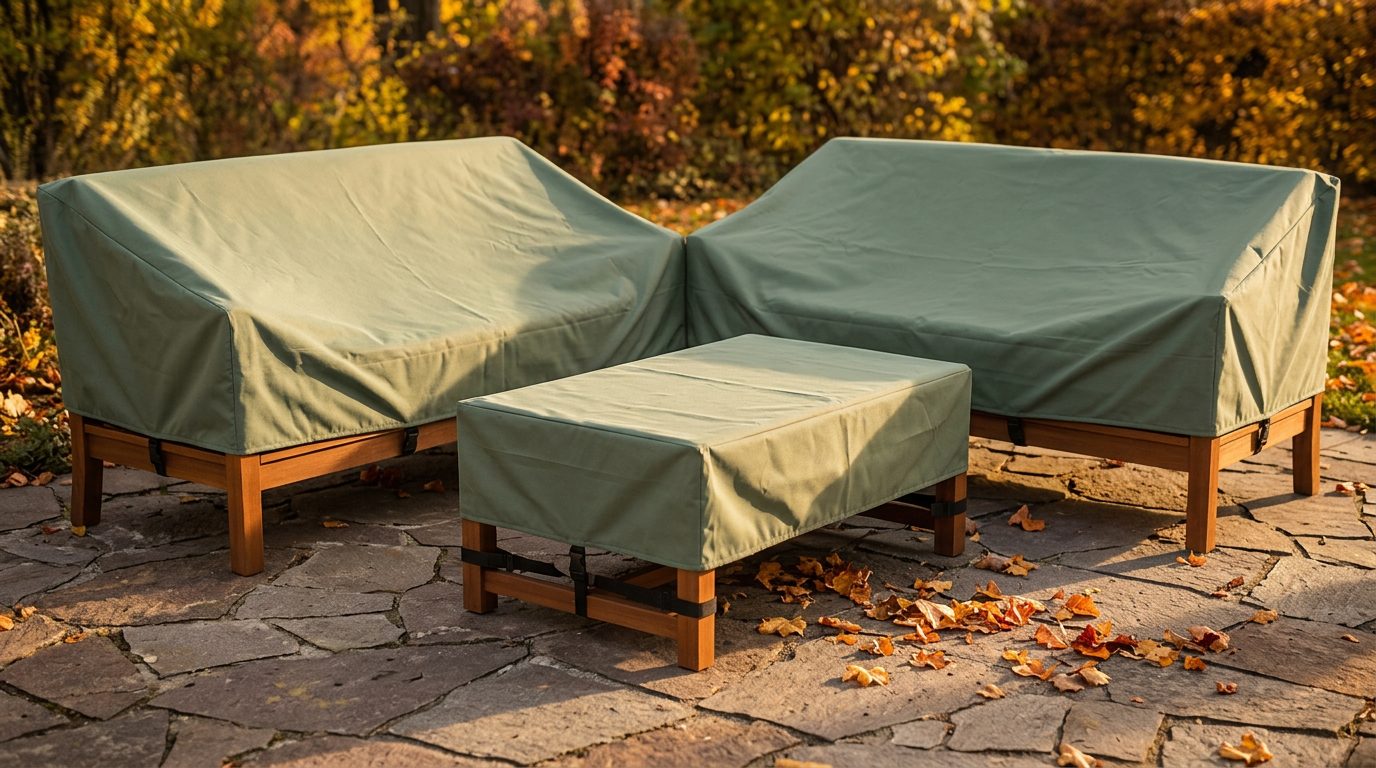
Cushions need to leave the furniture entirely
This is the step most people skip, and it's the one that matters most. Cushion foam holds water the way the furniture frame doesn't — a cover keeps rain off the outside, but foam sitting against a cold metal or wood frame all winter pulls moisture from both the air and whatever it's resting on. By spring, cushions left in place are often damp at the core even when the cover did its job perfectly on the outside.
Pull cushions off and store them separately, in something breathable rather than a fully sealed bin for the same condensation reason as the cover itself.
If you don't have indoor or garage space
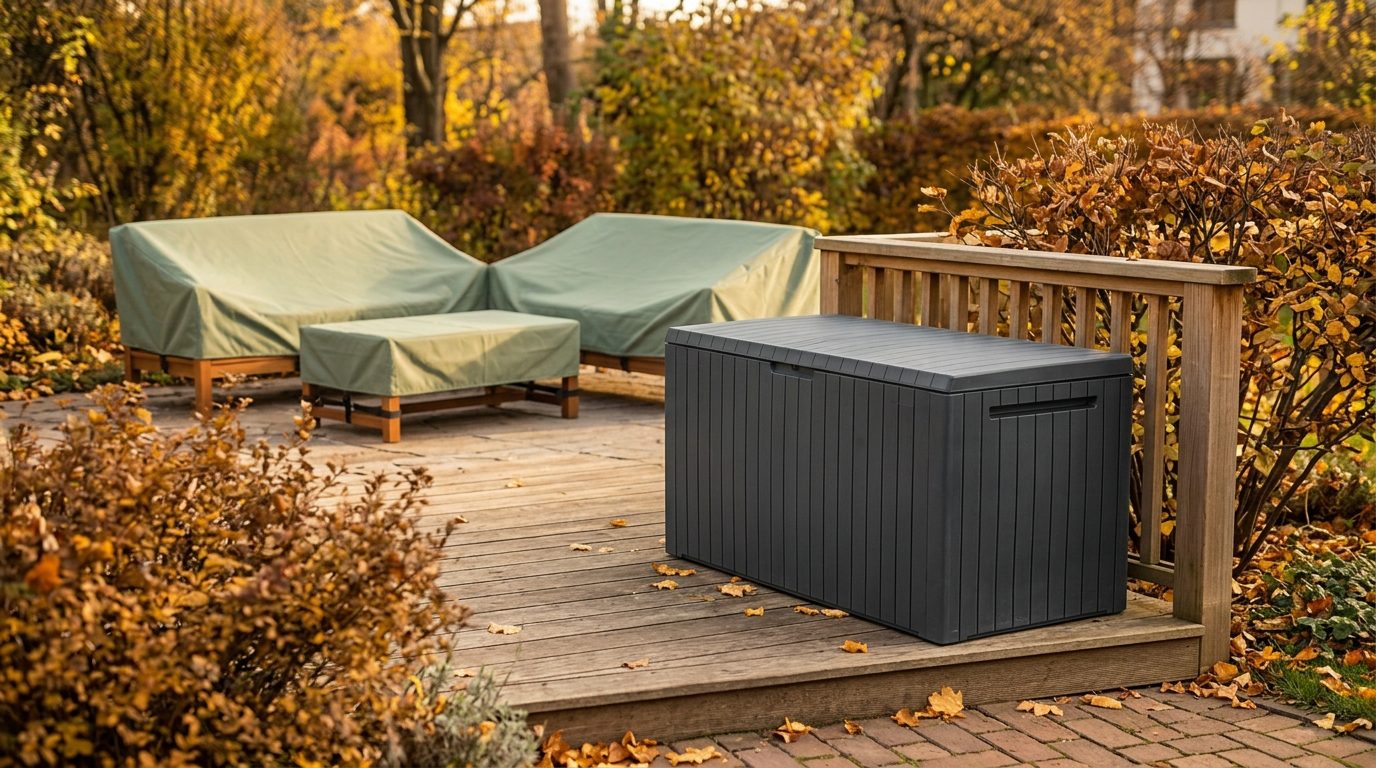
Not everyone has room to haul a full patio set indoors, and that's where a sealed deck box earns its cost — it's built to stay outside permanently, with a gasket designed specifically to keep weather out rather than relying on a draped cover that can shift in wind. It won't fit a full dining set, but it handles cushions, small side tables, and anything else you'd rather not carry up a flight of stairs every November.
What UV does that cold doesn't
Cold alone doesn't damage plastic or resin furniture much. The real damage happens from UV exposure combined with temperature swings between warm days and cold nights, which is most pronounced in exactly the autumn weeks when people are slowest to act, not in the depths of January when everyone's already covered up. If you're going to prioritise one piece of furniture to deal with first, make it whatever gets the most direct afternoon sun.
The rule
Treat the cover and the cushions as two separate jobs, not one. A good cover with cushions left in place still fails; cushions pulled and bagged with no cover at all actually does better than that combination. If you only have time for one this week, pull the cushions first.
For the rest of the autumn checklist — firewood, closets, entryways — the full seasonal rundown covers what else is worth doing before the cold properly sets in.
Picks mentioned in this guide
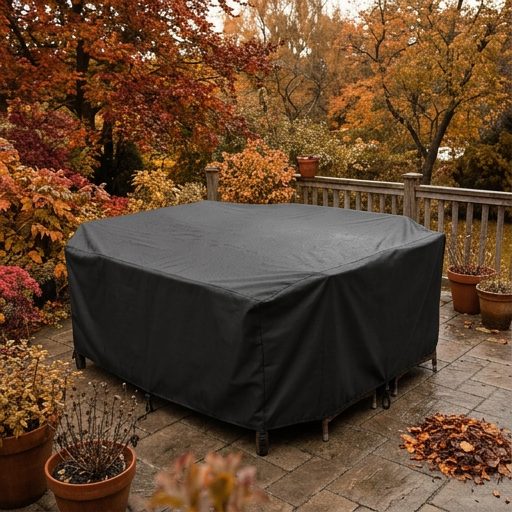
Outdoor furniture cover set
This furniture cover beats a thin tarp for one reason: it breathes. A fully sealed cover traps condensation underneath and can leave furniture damper by spring than if you'd left it uncovered.
- Breathable fabric prevents trapped condensation
- Windproof buckles and adjustable drawstrings
- Tear and UV resistant
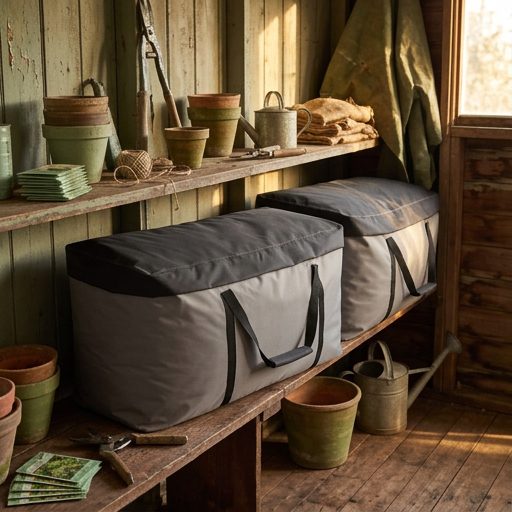
Water-resistant outdoor cushion storage bag
A furniture cover protects what's underneath it, but cushions fare better pulled off entirely and bagged separately — they're the part that actually absorbs water, and a cover alone doesn't stop them wicking up moisture from the furniture frame underneath.
- Separates cushions from the frame, where most moisture damage starts
- Handles make it a one-trip carry into the garage or shed
- Breathable fabric avoids the trapped-condensation problem of sealed bins
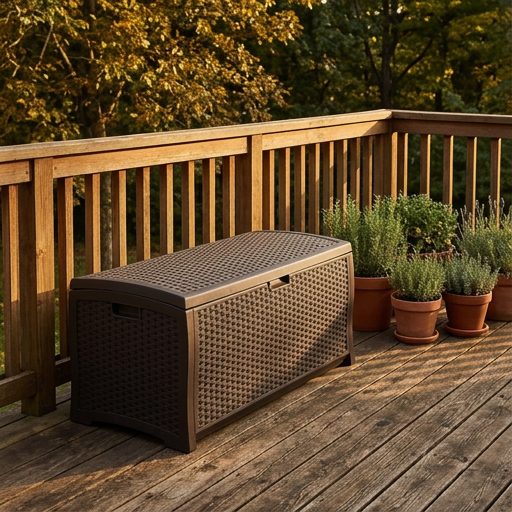
Weatherproof deck storage box
For anyone without garage or shed space, a deck box is the alternative to hauling furniture indoors entirely — a sealed, weatherproof bin that stays outside year-round and often doubles as extra seating.
- Stays outside permanently, no hauling required
- Sealed lid keeps contents dry through winter
- Doubles as a bench seat in the warmer months
Keep reading
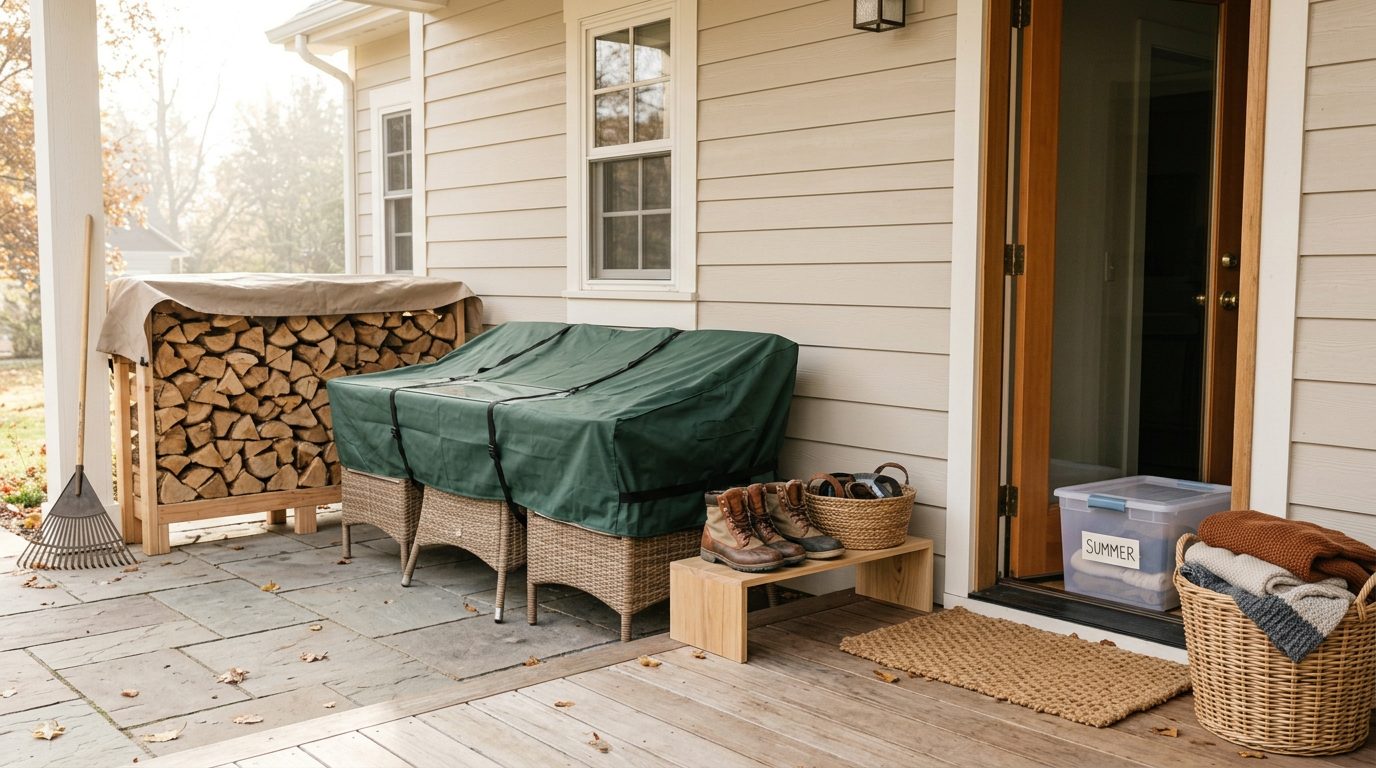
The autumn checklist that saves you a rough winter
Four things worth doing before the first frost, in the order that actually matters — starting with the one most people leave too late.
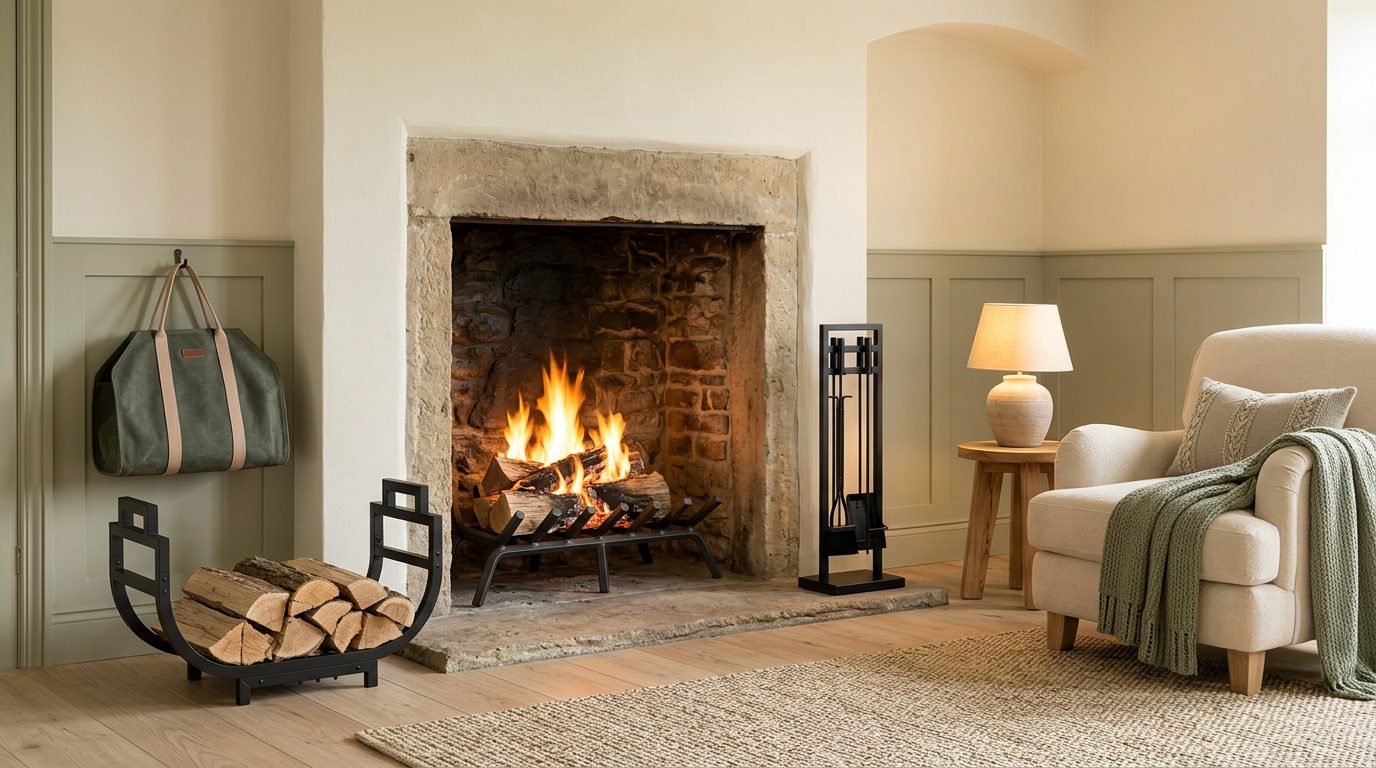
How to store firewood so it actually burns (and where everything else goes)
Dry wood stored badly turns damp again. Here's the setup for the stack, the day pile, the tools and the ashes, in the order the cold forces you to need them.
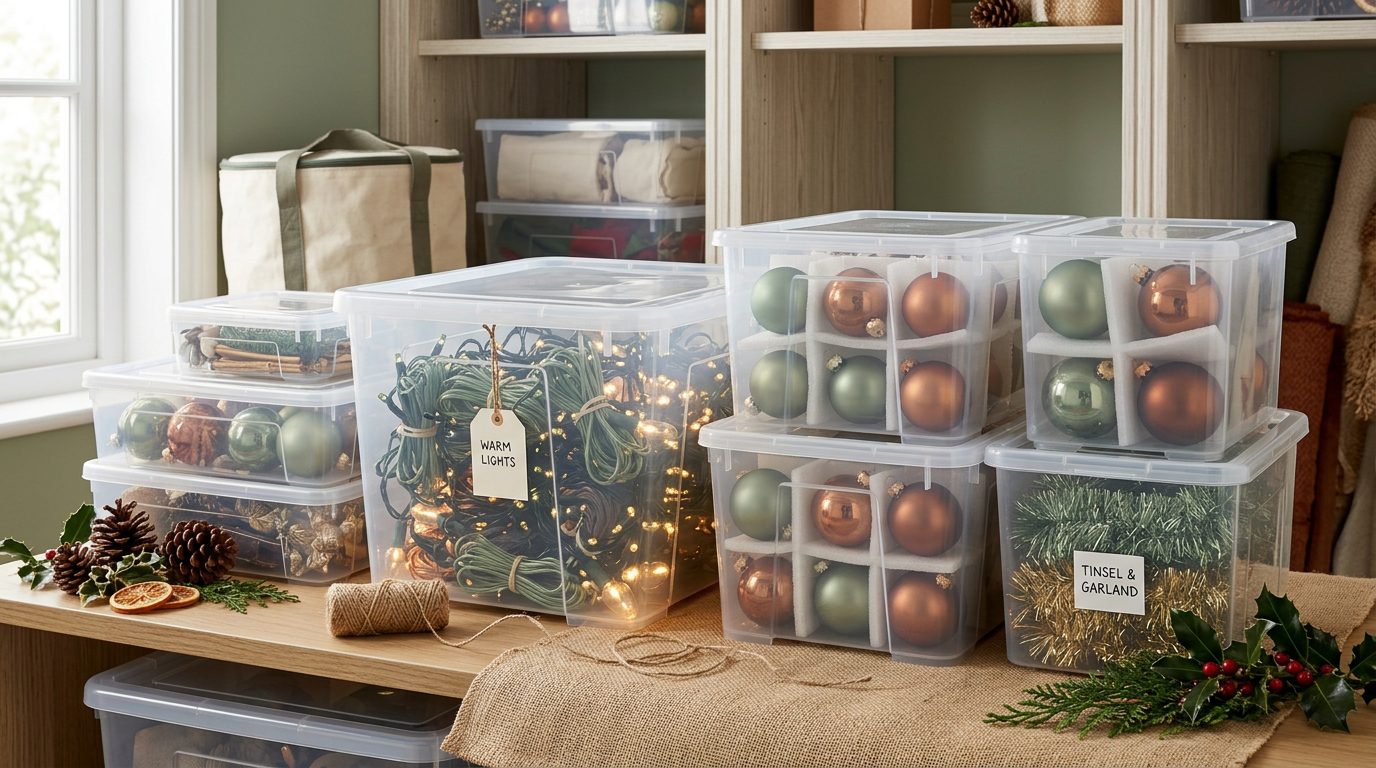
How to store Christmas decorations so next year doesn't start with a mess
The decorations aren't the hard part. It's getting them back out next year without a box of tangled lights and broken ornaments that makes the whole thing worth fixing now.