How to store firewood so it actually burns (and where everything else goes)
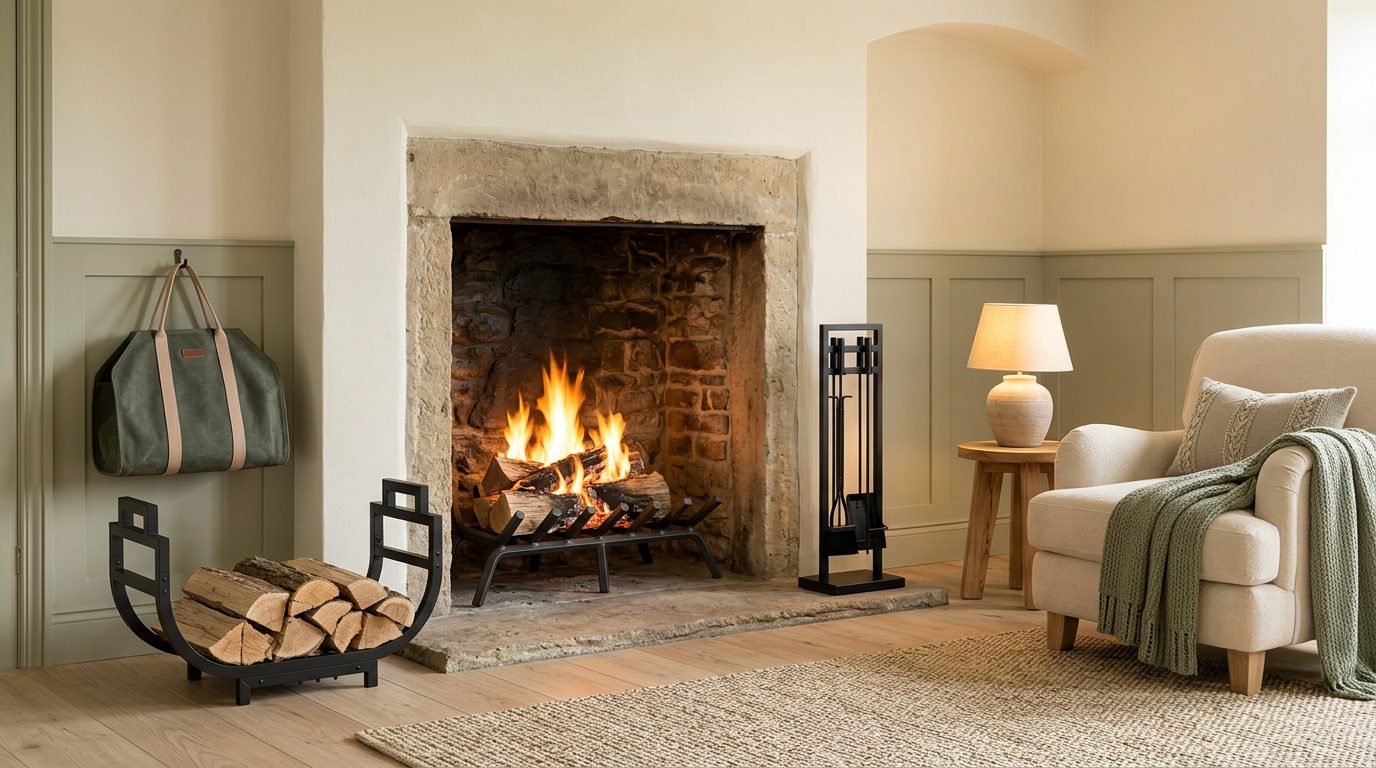
The first properly cold week is a bad moment to find out your woodpile is damp. By then you're hauling logs in the dark, the stove is smoking, and the fix (drier wood, a proper stack, somewhere to put the ashes) is something you meant to sort out in October. The weather sets this deadline, not the calendar, so it's worth an afternoon now.
One honest note first: storage keeps dry wood dry. It doesn't dry green wood. If your logs were cut this year, they need many more months before they burn well, so for this winter buy seasoned or kiln-dried wood and start next year's stack now.
If you do one thing today, lift the stack off the ground
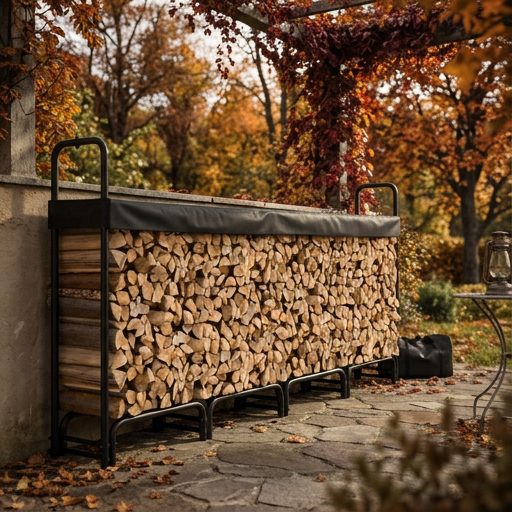
Wood stacked straight on soil or concrete soaks up moisture from underneath, and that's where most "dry" firewood goes wrong. A rack keeps air moving under the pile and keeps the bottom layer from rotting, which protects wood you've already paid for.
Check it's actually dry before you stack it
Wood that looks and feels dry can still be too wet to burn cleanly. The usual target is under 20% moisture, and a pin meter on a freshly split face tells you in a couple of seconds. It's the cheapest way to avoid a winter of smoky, sulky fires.
Stack it so it can breathe
Three rules cover almost everything: keep it off the ground, cover the top, leave the sides open. Rain falls from above, so protect the top. A cover pulled right down the sides traps condensation, which is the same trap as a sealed tarp over patio furniture. Keep the stack a little way from the house wall too, so air can move around it.
Keep only a few days' supply indoors
Indoors, the aim is a small, tidy supply of dry logs, not a stack. Bring in what you'll burn in the next few days and leave the rest outside. A carrier makes the trip from the stack to the stove a single run:
and a holder keeps that small supply off the floor and in one spot:
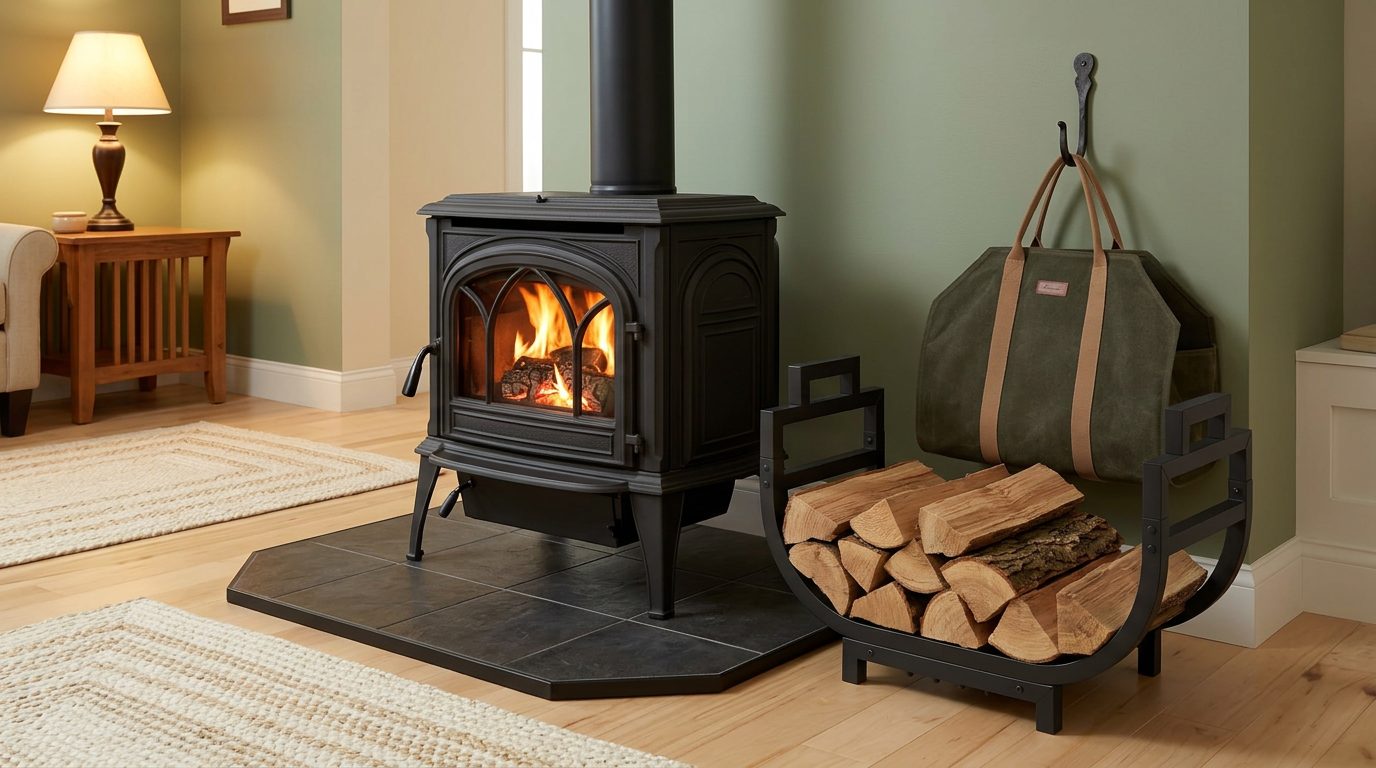
Hang the carrier on a hook by the door, as in the entryway setup, and it's always where you need it.
Give the tools a home
Tools leaning against the hearth end up on the floor, and tools in a drawer are never to hand. A set with its own stand keeps everything upright and together. Check the stand is stable and the handles are long enough to keep your hands well back from the firebox.
The ashes: the one to get right from the first fire
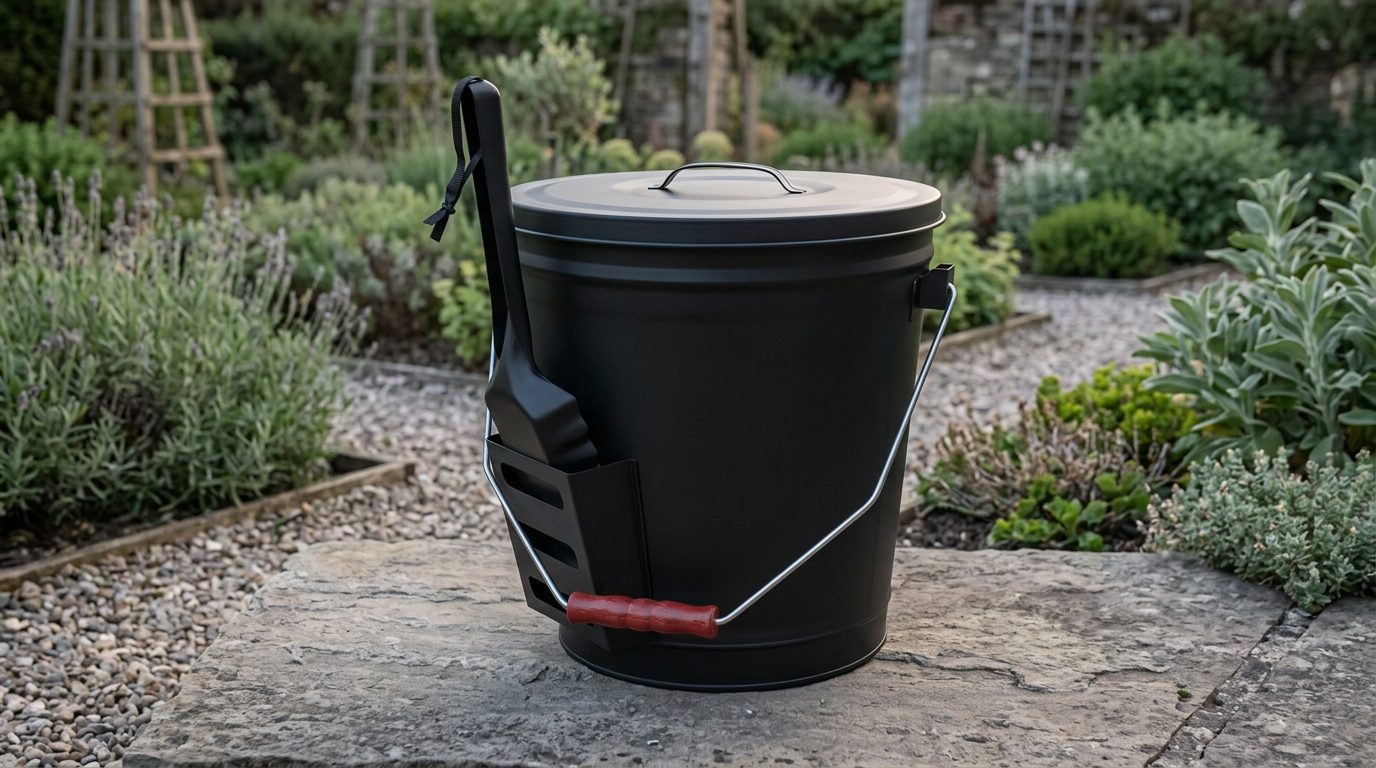
Ashes can stay hot enough to start a fire for days, even when they look and feel cool. Fire services give the same advice almost everywhere: a metal container with a tight lid, never plastic, paper or cardboard, kept outdoors well away from the house and anything that burns. About 3 metres (10 ft) from the building is the figure they commonly give, and not next to the woodpile, against the garage wall, or on a wooden deck. Never use a vacuum to pick them up. How long ashes need to cool varies by source, so check your local fire service's guidance.
Fire services also recommend having your chimney or stove inspected before the heating season starts. That one is a job for a professional, not a storage product.
The order to buy in
Buy in the order the weather punishes you. The rack comes first, because it protects wood you've already paid for. The moisture meter is next, so you know what you're burning. After that come the carrier and holder, then the tools. The ash bucket is the one you need on day one of burning, so don't leave it until you've already lit the first fire.
For the rest of the seasonal jobs (furniture, closets, entryway), the autumn checklist covers what else to do before the cold arrives, and measuring before you buy is worth doing before you order a rack for a specific spot.
Picks mentioned in this guide
Firewood log rack with waterproof cover
Firewood stacked straight on the ground wicks up moisture from underneath and stays damp long after a rain, even under a tarp. A rack lifts the stack off the ground, and the cover only needs to shed water from above.
- Elevates logs off damp ground
- Cover sheds rain without trapping moisture underneath
- Sized to hold roughly a week's worth of burning wood within reach of the door
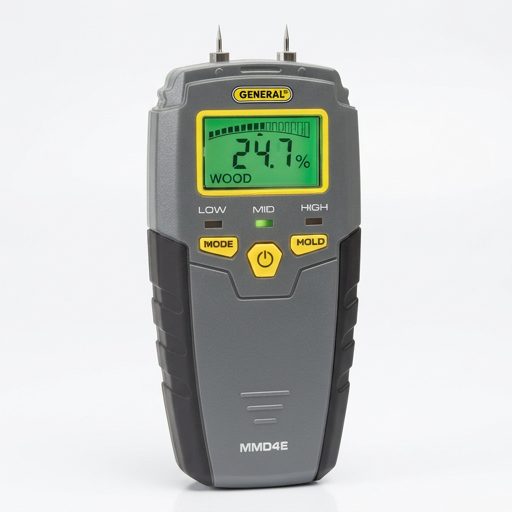
Pin-type firewood moisture meter
Wood can look and feel dry and still be too wet to burn well. A pin meter gives you a number in a few seconds, and you only need to check a couple of logs to know whether a stack is ready or needs longer.
- Replaces guessing with a reading in seconds
- Tells you whether to burn it, wait, or buy drier wood
- Small enough to live in a drawer by the stove
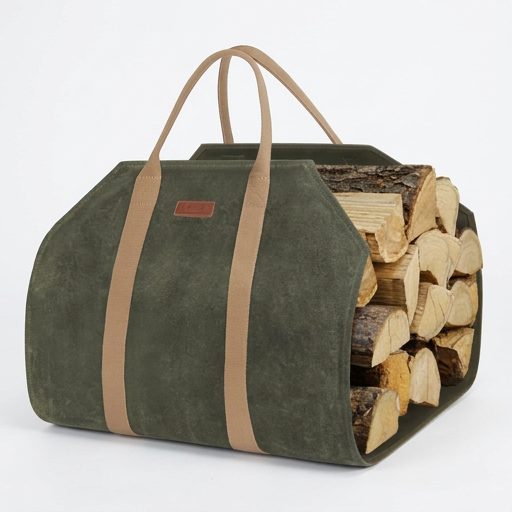
Heavy-duty canvas firewood log carrier
Carrying logs in your arms means three trips, bark down your front and a trail across the floor. A canvas carrier holds a full load in one trip and keeps the mess inside the sling.
- One trip from the stack to the stove instead of several
- Keeps bark and dirt off clothes and floors
- Folds flat and hangs on a hook by the door
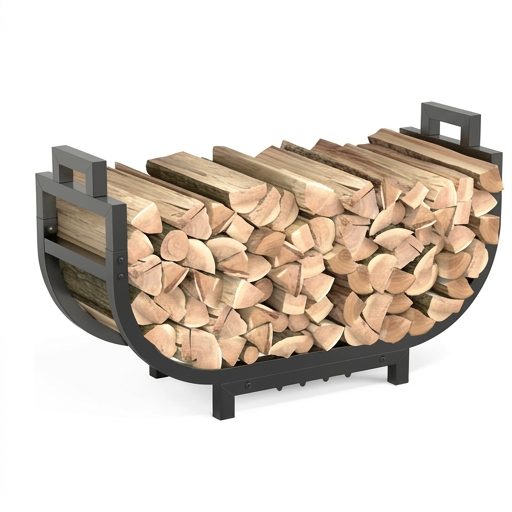
Indoor firewood log holder rack
Indoors you want a small, tidy supply of dry logs within reach, not a stack. A holder keeps a few days' worth off the floor and in one place, and the main store stays outside where it can breathe.
- Holds a few days' supply, which is all that belongs indoors
- Keeps logs and bark off the floor and contained
- Some designs add a shelf for kindling
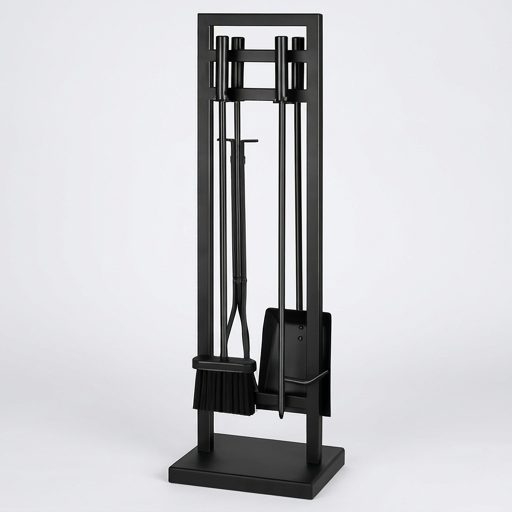
Fireplace tool set with stand
Tools that lean on the hearth end up on the floor, and tools in a drawer aren't there when you need them. A set with its own stand keeps the poker, shovel, brush and tongs upright and within reach.
- Poker, shovel, brush and tongs kept together in one place
- A stand keeps them off the hearth and the floor
- A long handle keeps your hands well back from the firebox
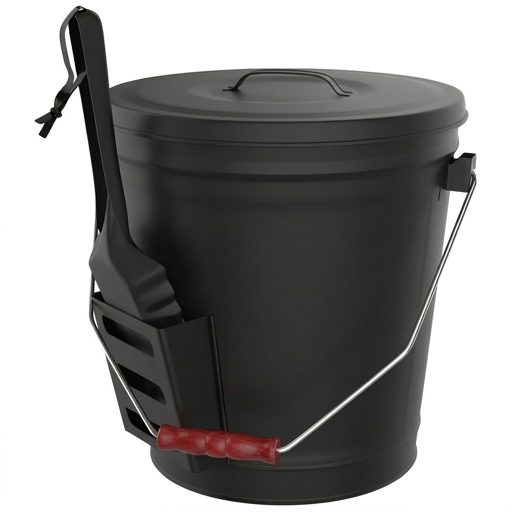
Metal ash bucket with tight-fitting lid
Fire services give the same advice everywhere: ashes go in a metal container with a tight lid, never a plastic bin, paper bag or cardboard box, because embers can stay hot for days after the fire looks out. This is the one item on the hearth list you need from your first fire.
- Metal body and metal lid, as fire services recommend
- A tight lid keeps embers contained and starves them of air
- A handle makes the carry outside a one-hand job
Keep reading
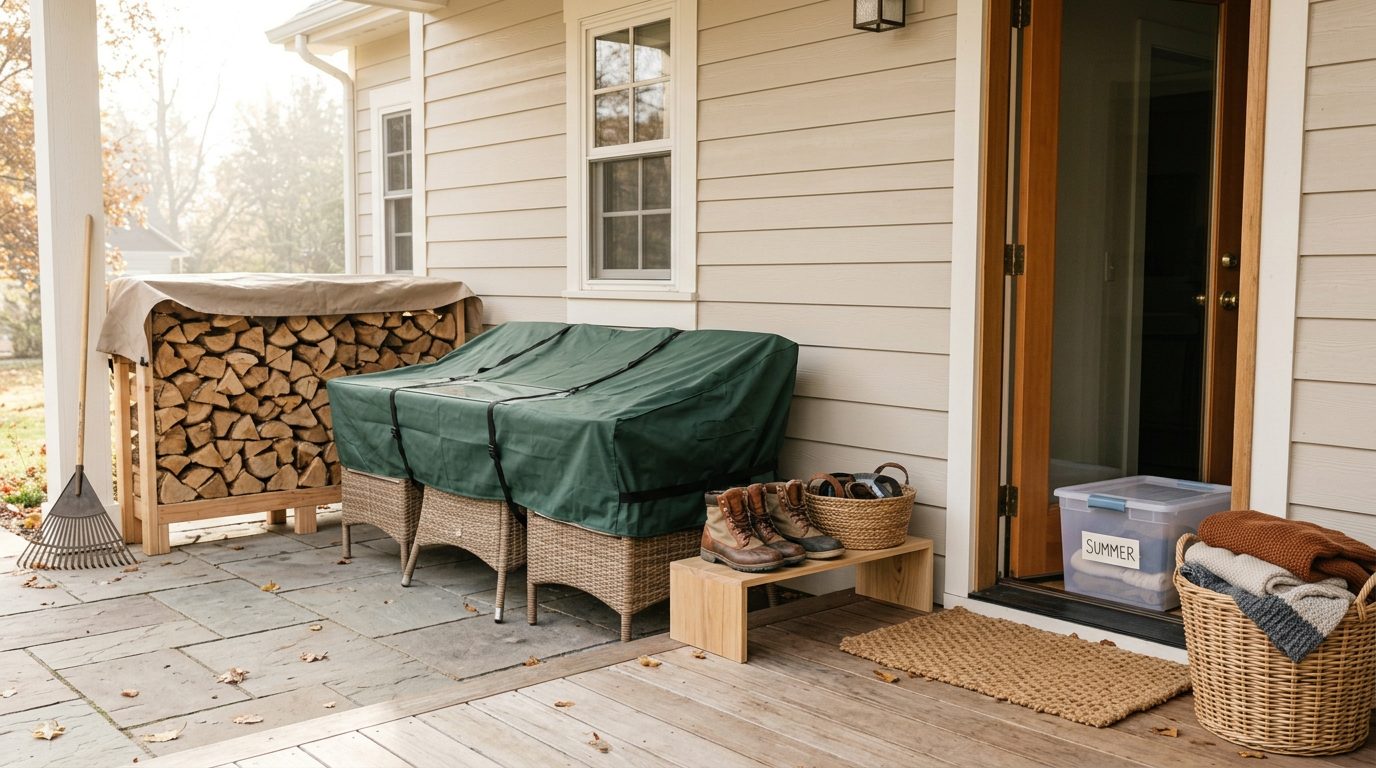
The autumn checklist that saves you a rough winter
Four things worth doing before the first frost, in the order that actually matters — starting with the one most people leave too late.
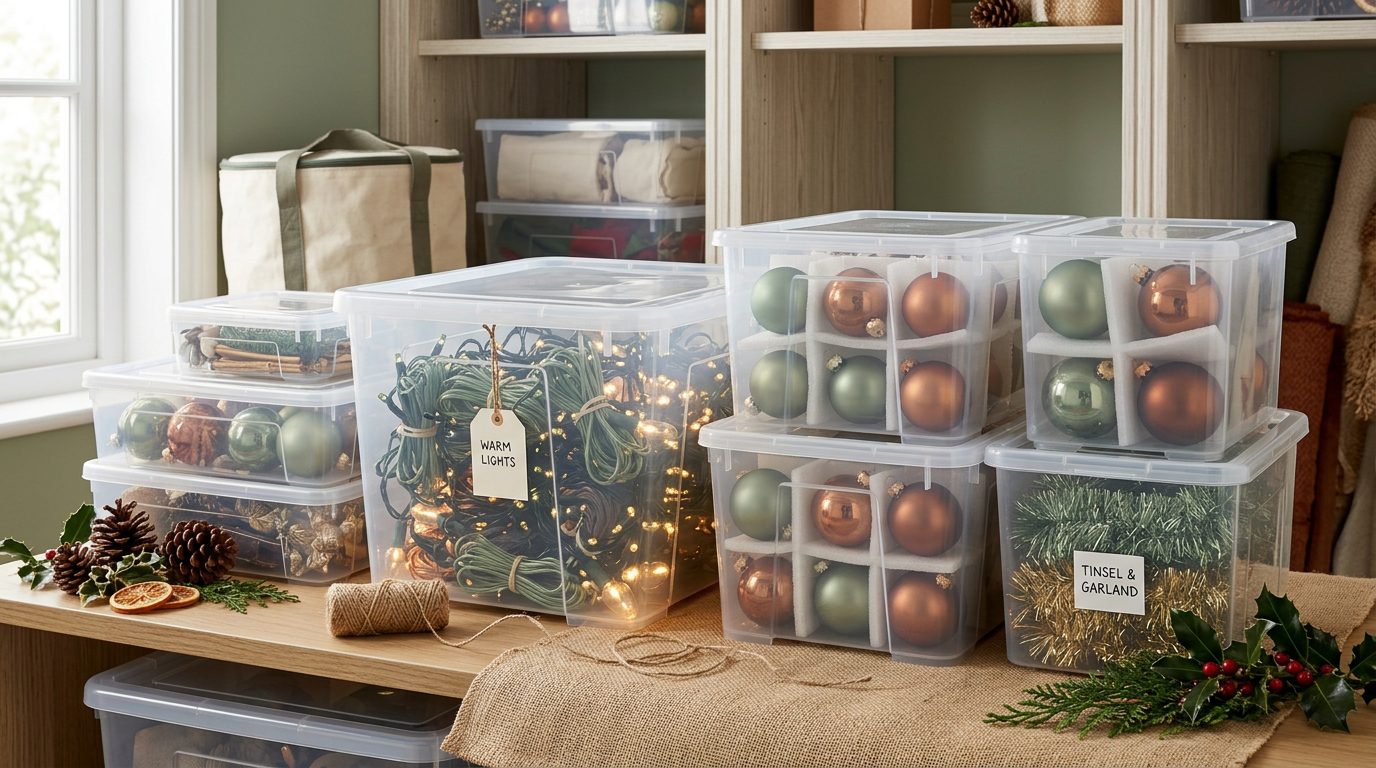
How to store Christmas decorations so next year doesn't start with a mess
The decorations aren't the hard part. It's getting them back out next year without a box of tangled lights and broken ornaments that makes the whole thing worth fixing now.
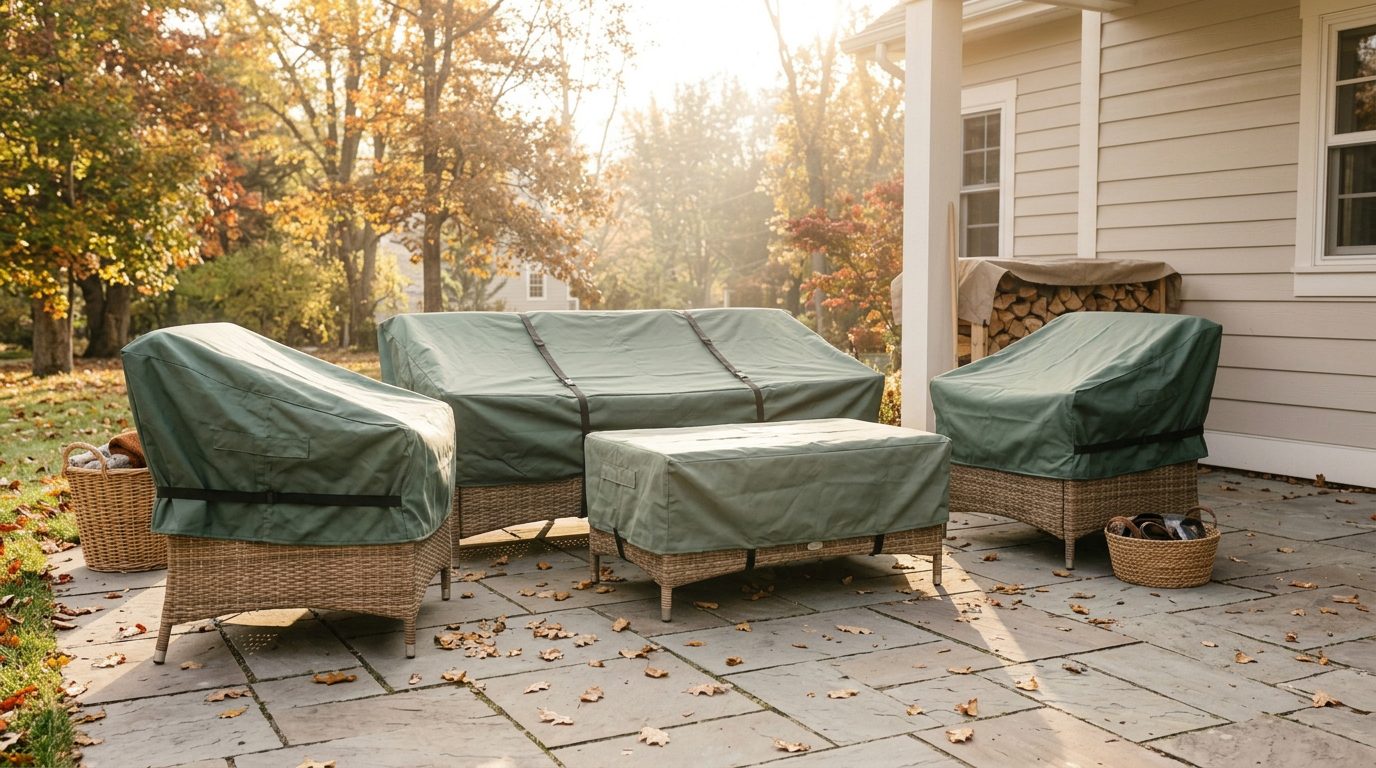
The right and wrong way to store outdoor furniture for winter
Covering furniture and storing it properly aren't the same job. Here's what actually determines whether it survives the winter.